

ATX Writing Club | Featured Writer

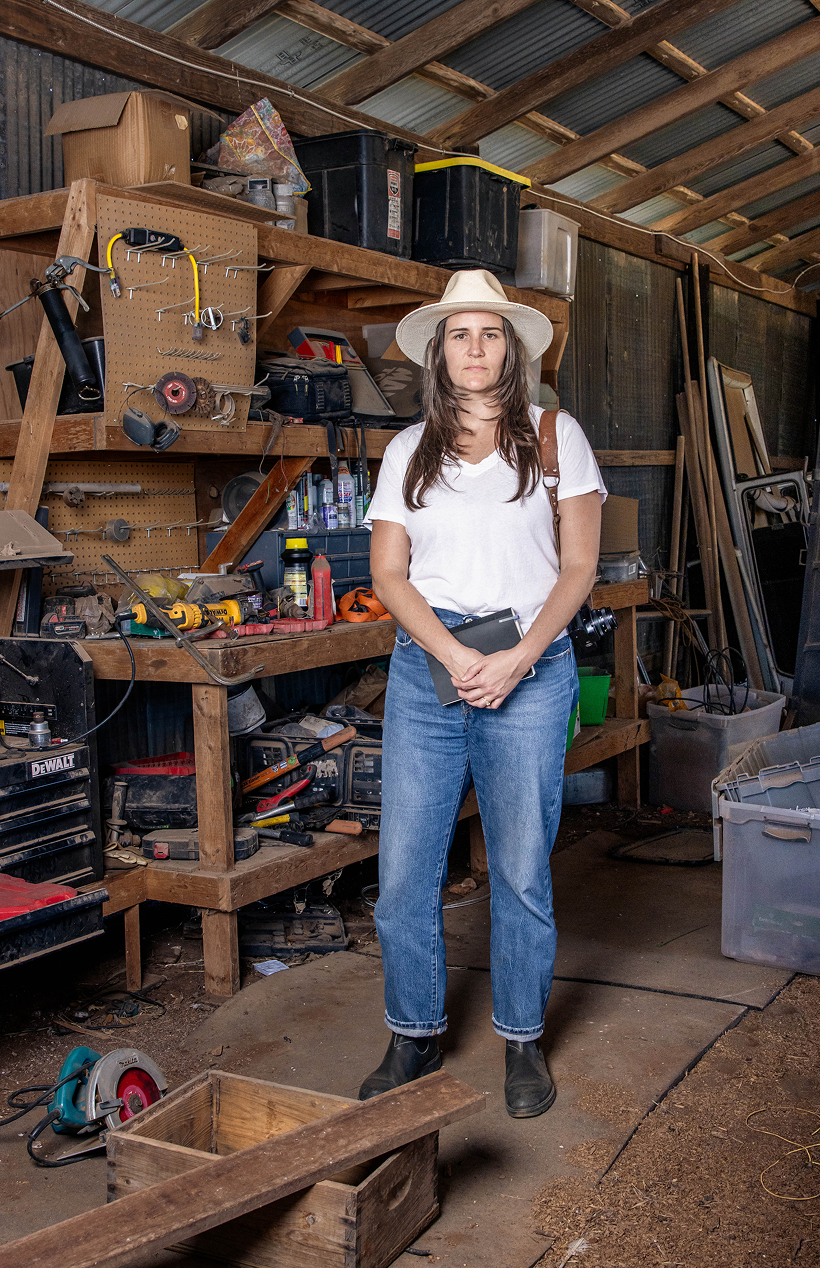
Katie Rice
To the bison giving its life today:
Let me begin with gratitude. I am grateful for the way you have brought these fields back to life, how your ancestors fed our ancestors, how your body will feed me and so many others.
I admire your soft eyes, your strong hooves, and the tenacity of your breed to stay even when we tried so hard to make you a blank on the prairies.
Thinking of you in the field—which is the image that comes to me, sun on a soft brown face, wild grass flattened by the wind—I am reminded of my own animal-ness. My lungs that fill with air, my muscles that stretch and ache, the fat on me that moves when I run. I am reminded more of the ways you and I are alike than I am of the ways we are different.
Since you are to die today to feed the animal that is my body let it be marked by these words, let it be worthwhile, let it be observed. I bring to you my attention and my spirit.
I am struck by an overwhelming feeling of duty to you, bison. The duty to live intentionally and to the best of my ability with the energy you’ve provided me. The duty to be grateful for the sun on my face and the feeling of the earth, since you will be leaving those small pleasures.
What I am saying is that I offer you what you have offered me: my life.
The bison’s heart was heavy in my hand, triangle shaped with open ventricles that looked like trumpet mushrooms leading into the hidden, muscly chamber. Behind me, the bison who the organ had been taken from was strung up by its achilles tendons, its skin and fur removed and laid out on the autumnal grass. Just an hour before that, the heart had still been pumping blood that I drank from the neck of the bison in its moment of transition from life to death: salty, sweet, mild.
The killing of this bison hadn’t been done for fun or sport. Nor had it been done, as it was done by settlers in the 1800s, for just the money the bison leather could garner. This bison had been killed in a community harvest at Roam Ranch, a regenerative farm in Fredericksburg, Texas focused on re-introducing bison to their natural habitats and re-introducing people to the intentional and spiritual harvest of animals.
The vision of Roam Ranch is to turn almost 1,000 acres of central Texas land back into the kind of place that can support an ecosystem instead of the “unsalvageable,” industrially farmed land the co-owners, husband and wife Taylor Collins and Katie Forrest, had purchased. Taylor said it looked empty, like the face of the moon when they had first arrived. On the day we visited, tall wild grass rustled, beauty berries and fig trees blossomed, birds of prey swooped overhead. They’ve been able to so radically shift the makeup of this land through raising animals, planting native plants, employing regenerative farming practices, and generally letting nature do her thing again. In addition to being stewards of the land, they’re also educating people about farming, food, and the cycles of life and death. To that end, a few times a year they invite groups of people out to the ranch to learn and participate in what it means to harvest an animal.
The group of us—farmers, writers, hunters, generally interested folks from Central Texas—were on the property that day to see the whole process, the entire cycle of life from bison grazing in a field to meat on a dinner table. Taylor and Katie had prepared us for the experience by encouraging us to write letters to the bison and take some time to sacrifice beforehand. They offered the ideas of abstinence or sauna. When we got there the morning of, they gathered us around and walked through what would happen—a removal from the herd, a single kill shot, a moment of gratitude, a skinning and butchering. Each part of the bison would go to something: the caul fat to a regenerative farmer, leg meat to the hunters who knew how to make it into rich stews, the skin of the testicle for a coin purse, the hooves to be made into bolo ties, the heart for tartare we would eat right then and there.
I do not know quite how to explain to you what it was like to hear the crack of the bullet and know the bison had been hit. Or how it felt to stand in the hot sun and listen to Taylor read a letter of gratitude to the bison. Or what it was like to crouch down and put all of my fingers in the fur of the bison’s face, its eye already beginning to cloud. I do not quite know how to explain it because how does one explain the chasm between life and death?
When the bison was taken from the field, a puddle of garnet blood left behind, its full three hundred pounds hanging from a tractor, something shifted in me a bit. The giant question of life and death turned into a much more approachable question about what we would do to turn this bison from animal to food. Under a few shady trees, we butchered the animal—or really, a few Roam Ranch employees butchered while we watched and learned. The man guiding us through butchering took the skin off, opened up the animal to disembowel it. The slide of the knife along the sinew that would release the stomach was slow, the sound of the fiber loosening it sounded like a blade on balloon, squeaking, delicate. A seasoned hunter jumped in to help out, separating silver skin from meat with a knife over a metal table. The organs came out, one by one—smooth, purple liver, forbidding white gallbladder, blue-grey squidgy intestine. Then, muscular triangle of heart.
The three chefs cut it up, following the craggy rivulets on the outside to remove the veins that had made those little rivers. They swiftly but carefully sliced away the waxy yellow fat. What was left, they treated the way you would any tartare, cutting the meat into small, uniform cubes. The raw heart was mixed with herbs and vinegar and mustard seed, the acid of the tartare dressing and the tang of the sourdough bread underneath it making the heart the solid center of the dish. I was surprised at how mild it all tasted. The freshness making it easily edible, not bracing or iron-rich the way organs sometimes can be. There was still sweet grass in the mouth of the bison when we removed its grey tongue. All of that mild plant turned into organs and muscles bathed in that sweet, mild blood. It was delicious. It was rich. It was profound.
This kind of careful slicing and seasoning isn’t how people have always eaten their bison.
Large pieces of bison meat used to be dried in the Texas sun by the Comanche and then pounded into fine shreds. I imagine the men and women beating stone against meat again and again and again, remember the way my own arm can ache after I grind nuts and spices with a mortar and pestle. Then, they’d take that snowy, shredded meat and mix it with rendered fat from the bison, maybe some berries if they were in season. Instead of covering it in plastic like we do now, they put this energy food—called pemmican—into an organ and let it dry, the organ shrinking and sealing the pemmican in as it lost its moisture. The original vacuum seal. These bars would accompany them all throughout the winter, through the long hunts to kill their next bison. It’s resourceful, this kind of food.
The settlers, on the other hand, used to kill the bison, take its hide and its tongue and leave the rest to rot. Those are the people I come from, my father’s family having been in the United States since the Revolutionary War. I do not come from a rich tradition of Native people. I am much more closely related to the men who yelled yeee-hooo! as they slaughtered bison after bison for leather that could make them money and be turned into machine belts back East. The tongues were canned and shipped out or served as delicacies, covered in sauces in restaurants with silverware and china plates. The men who killed the bison did little of the work of turning the bison into food themselves, left so much to the vultures. It’s showy and wasteful, this kind of food.
I had imagined that my lineage and my current life in the city of Austin would make this community harvest feel more foreign, more disconnected from me. But, like Taylor said when he gathered us around at the start of the day, this is in all of us, this harvest—hunting and sharing an animal, with your community. It felt ancient and new at the same time. I didn’t feel on the outside, I didn’t feel at a distance.
Even the butchering of the animal had felt less shocking than I’d thought it would. Despite being a lover of food and a dedicated home cook, I am also a person who can find the glossy chicken breasts at the grocery store revolting if I look at them wrong, can want to turn away from the pale veal chops in the butcher case, so I thought I might struggle. But seeing the whole animal up close, having just witnessed its vitality, things felt very natural, connected. I had no impulse to turn away. The whole experience was a turning towards. Towards the bisons’ big brown eyes looking at us when we drove up to the herd. Towards our hands on the bison’s face after its death. Towards the way I’ll feel connected, always, to Joan and Ruth, the matriarchs of the herd we took from.
The morning after the harvest I woke up early, restless. A small inconvenience with my pharmacy caused me to dissolve into tears that I couldn’t stop. It was not about the pharmacy. Tears like that never are. On the farm, the man butchering the bison had said, death is normally in a box over there, tied up with a neat little bow. Today you’re going to need to bring that box over here and open it up. Turns out the bow is a little harder to tie back on.
I have had the good fortune to eat many memorable meals in my lifetime—pigeon and sea worm in China, Oaxacan mole over fresh tortillas, barbecued chicken made on huge grills by my uncles—but never have I eaten something that stirred something so deep in me. I’ve woken up with food poisoning before, the meat sweats, a hangover, but I hadn’t before woken up with the velvet blanket of a spiritual experience still over me.
Multiple friends who I explained the experience to immediately followed up by asking if I would now be a vegetarian. But confronting the harvest, butchering, and eating, was not a horrifying experience that led me to renounce eating animals. At Roam Ranch, it was instead nourishing in all ways. I did not feel called towards vegetarianism. Instead, I felt a duty to be a more engaged consumer of what I take in. I felt a deep connection to the energy of all the animals that had ever fed me. I felt a oneness. I understood that sometimes I will be the one with my fingers in the neck of the downed animal and one day I will be the downed animal. And though I don’t suspect I’ll be taken apart and eaten when that happens, what an honor it would be for my body to be as nourishing to someone as the bison’s had been to us.